
AI DEV RADAR
375 fresh AI & vibe-coding news · refreshed every 4h
apache/airflow
Apache Airflow - A platform to programmatically author, schedule, and monitor workflows
I Spent a Year Talking to Anthropic Employees. Here's What They Believe
How OpenAI’s Performance Factory keeps ChatGPT fast
Learn how OpenAI built the Performance Factory, a system of Codex-powered workflows that finds and fixes performance issues to help keep ChatGPT fast.
[AINews] Gemini 4 Neon: GDM's Opus/Sol Contender
November 18, 2026 — Google’s middle tier scores 61 on the Intelligence Index. Plus, Anthropic prices its IPO at $83.

Steve Yegge on AI Agents and the Future of Software Engineering
Steve Yegge on the 8 levels of AI adoption, why big companies may be doomed, and why he and many AI-adopters feel drained from using agents non-stop
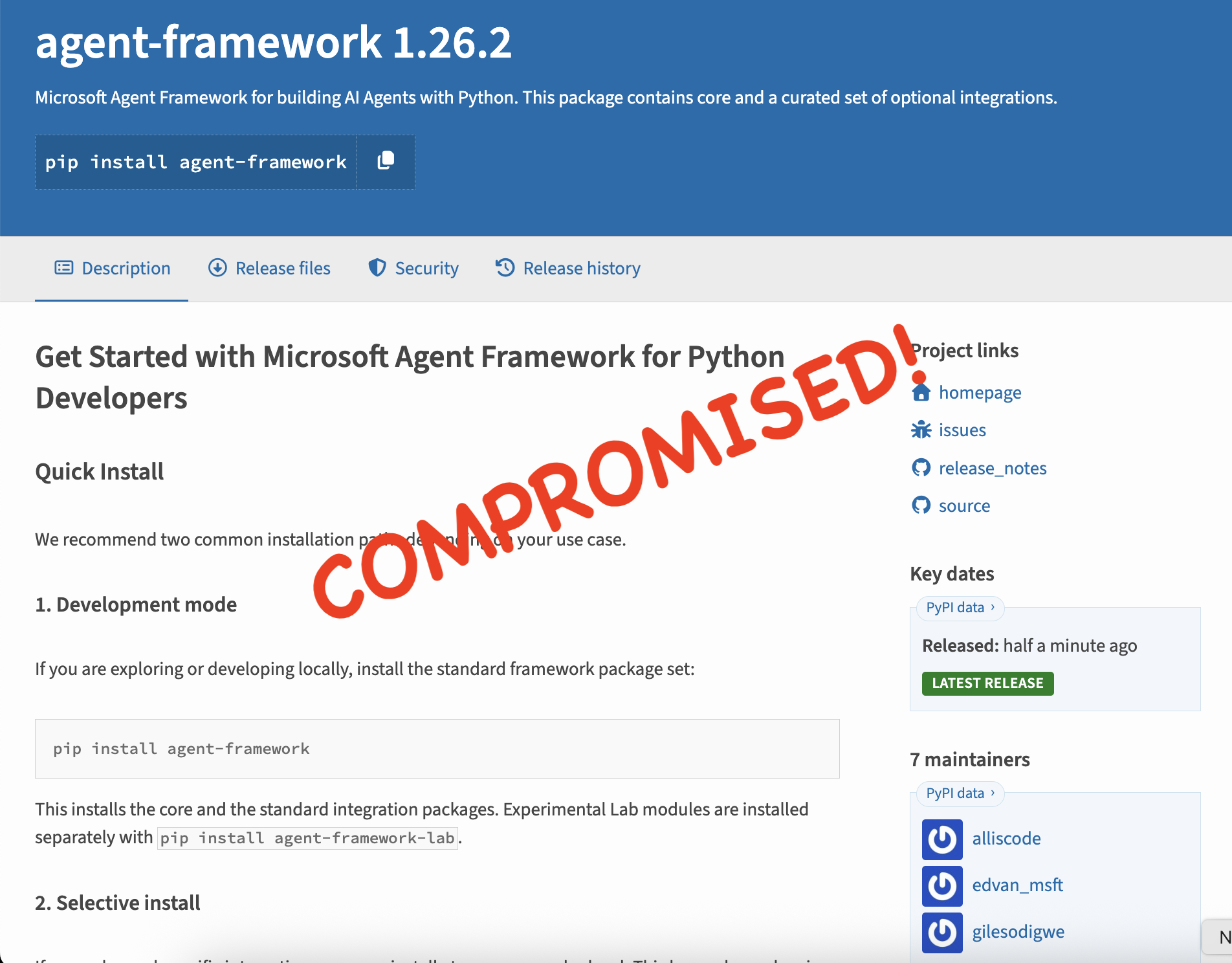
Official Microsoft agent-framework PyPI package compromised
Versions 1.26.1 and 1.26.2 of the official Microsoft "agent-framework" Python package contain malware - an account compromise is likely
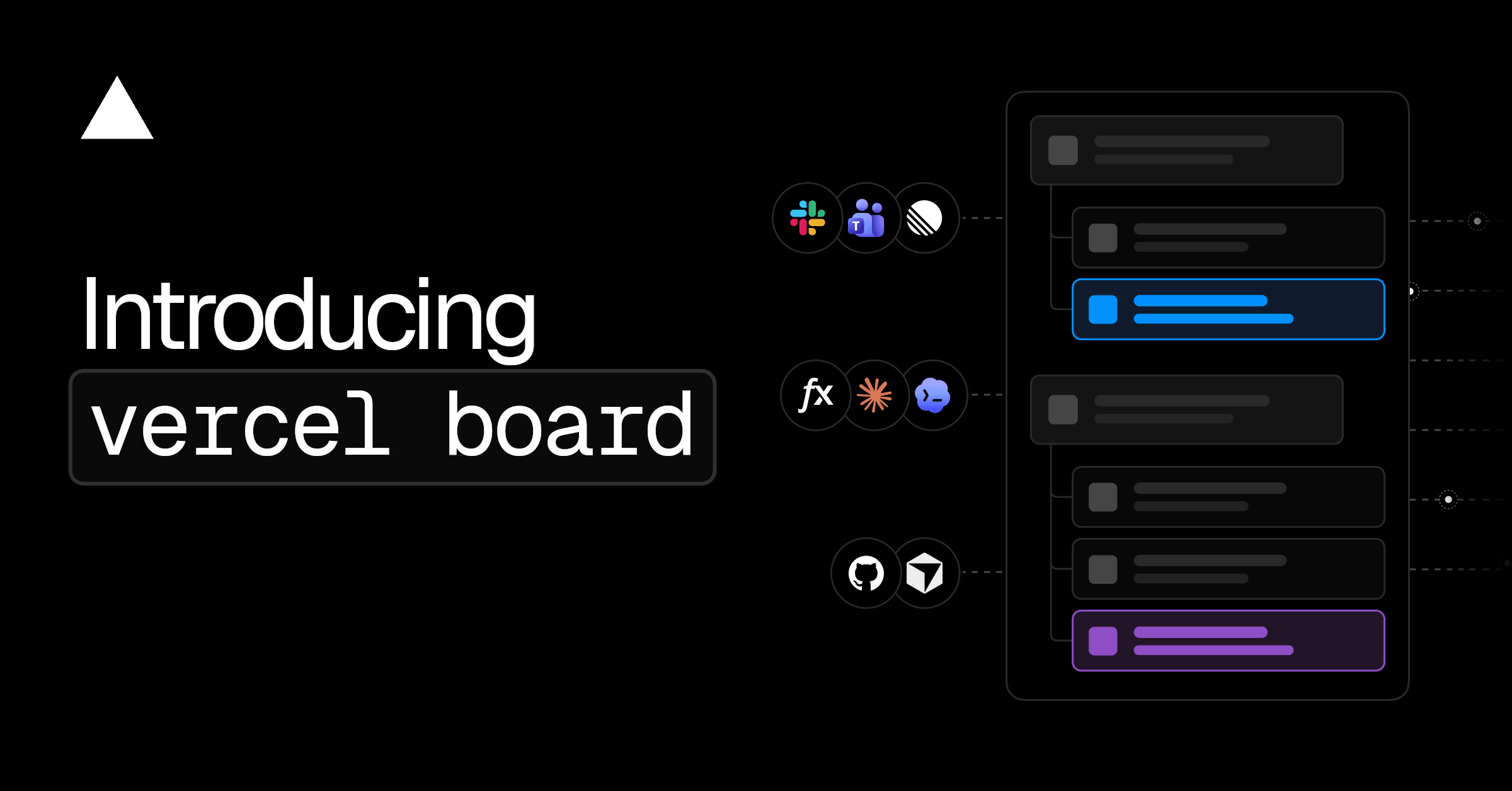
Show HN: Vercel Board – a shared, secure message board for agents (public beta)
Vercel Board is an experimental primitive: a shared message board where agents coordinate tasks, exchange context, and work together across your tools.
Show HN: ADE Index – a sourced and ranked index of 975 agentic coding tools
383 agent workspaces, the apps where you run, watch and steer coding agents, plus the CLI agents, editors and builders around them. Real screenshots, prices and release activity, one listing per product.

Previous-Token Prediction Based LLM Inversion for Prompt Reconstruction
Large language models (LLMs) generate text by auto-regressively sampling the next token. This inherently leads to a many-to-many mapping between prompts and responses, complicating the task of inferring prompts from observed outputs. Prior work on LLM inversion frames prompt recovery as a semantic reconstruction task. They rely on fine-tuning pretrained sequence-to-sequence models on large external datasets--and requiring access to model weights or logits--to generate semantically plausible prompts. In contrast, we present a functional approach to inverting a given LLM in a black-box setting, without auxiliary aids. We train an explicit inverse language model entirely from scratch on data synthetically generated from the target LLM itself. Analogous to forward next-token prediction, our inverse model is trained using previous-token prediction, establishing a generative link between the forward and inverse processes that enables faithful prompt reconstruction. Moreover, it naturally supports diverse prompt reconstructions through sampling, whereby all such prompts induce similar responses under the forward, target LLM. Our approach generalises across datasets and exhibits transferability in reconstructing prompts from responses generated by different LLMs. Further, across the set of token based evaluation metrics for prompt and response reconstructions, our approach outperforms prior work.

Newsom touts an AI kill switch to halt dangerous OpenAI, Anthropic releases
California’s governor unveiled sweeping recommendations from a panel of experts on how to mitigate catastrophic risks from AI systems.